
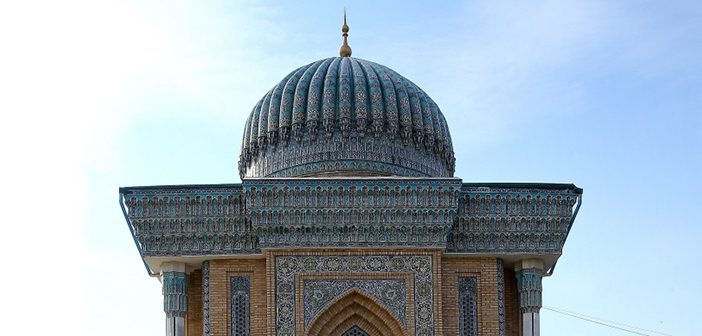

Imām Abū Mansūr al-Māturīdī (d.238/852) and Imām Abū al-Hasan al-Ashʿarī (d.260/874), are recognized as the two imams of sunnī creed. Both played an instrumental role in defending orthodox Islamic beliefs from the influx of external philosophies in the Islamic world as well from other theological factions like the Mutazila. Their efforts established the theological framework which would come to be embraced by most of the Islamic world. Whilst the life and times of Imām Abū al-Hasan al-Ashʿarī are well known, the same cannot be said about Imām Abū Manṣūr al-Māturīdī, even though he was the earlier of the two. Concerning his significance as the first imām to codify creed, Imām Zāhid al-Kawtharī (d.1879/1952) writes in his introduction to Ibn Asākir’s Tabyīn al-Kadhib al-Muftarī,
There is no one who rivals Imām al-Ashʿarī amongst the kalām scholars considering the immense work that he did. However, some of his views had limitations which were clear in the estimation of one who would carefully examine his views in certain deductive matters. These views had some implausibility from the perspective of reason in some matters and from the perspective of the revealed sources in other matters. These included his position concerning the good and evil (al-taḥsīn wa al-taqbīḥ), divine teleology (al-taʿlīl), the status of the transmitted evidence (al-dalīl al-naqlī) and the likes. The reason for this is that the one who has engaged in lengthy debating with the likes of the Muʿtazila and Hashwiyyah, will no doubt be affected in his positions by some of these matters. The likes of this did not occur for Imām al-Ashʿarī’s contemporary, the Imām of guidance (Imām al-Hudā) Abū Mansūr al-Māturīdī, the Shaykh of the Sunnah in the Transoxiana region. This was due to the dominance of the Ahl al-Sunnah upon the various factions of the innovators in that region such that their controversies were unable to manifest. The Imām mastered the ability to traverse upon a path of absolute moderation in his deductions, such that he granted the transmitted tradition its right and the intellect its rule. Therefore, Imām al-Ashʿarī and Imām al-Māturīdī are both the imāms of Ahl al-Sunnah in the east and the west. They have a considerable number of books and most of the differences that occurred between the two of them were semantic differences.[1]
Our Imām is therefore the foremost master and codifier of the creed of the Ahl al-Sunnah. Yet despite his influence and recognition by those who adhere to his creed, surprisingly little is known about his life and times. The longest biographical entries written on the Imām have been written by Abū al-Muīn al-Nasafī (d.438/1046) in his Tabṣirat al-Adillah, and Imām Murtadā al-Zabīdī (d.1790) in his commentary on Ihyā ʿUlūm al-Dīn, both of which I will quote from in this article. However, none of the biographical entries are detailed to say the least; most are repetitions of that which preceded them and leave the reader yearning for more information concerning the life and times of the great Imām. Even more surprising is the fact that despite the Imām having authored a monumental exegesis entitled Taʾwīlāt al-Qurʾān, his name is not found amongst the classical exegetes in the tabaqāt works. The great Imām ibn Jarīr al-Tabarī (d.310/923) is often regarded as the classical master of Qurʾānic exegesis and given the appellation, “Sayyid al-Mufasirīn” (Master of Qur’ānic exegetes) and rightly so. His encyclopedic thirty volume exegesis entitled Jāmiʿ al-Bayān an Taʾwīl Āy al-Qurʾān is considered the earliest and most authoritative complete commentary on the Qurʾān. Yet it is never mentioned that Imām al-Māturīdī was his contemporary and an author of his own monumental Qurʾānic commentary with his own unique approach to exegesis. Such a pivotal figure requires recognition, not least because his remarkable contributions have shaped the creed of the ummah of Islam and have ensured the preservation of orthodoxy.
Some biographers have mentioned a few reasons for this lack of information on the life of the Imām. Amongst the greatest causes is the fact that much of the scholarly writings from the Transoxiana region are either lost to history or remain as manuscripts. The cause of them being lost to history can be ascribed to the Mongol conquest of Transoxiana in 1219. The brutal sack of Transoxiana’s cities such as Bukhara and Samarqand resulted in the burning of countless libraries which created a huge gap in classical Islamic literature. As such, there are many works ascribed to Imām al-Māturīdī which have been mentioned by his successors and biographers yet remain lost to history. As for many works remaining as manuscripts, then a cause of this is the fact that many of the countries in the Transoxiana region only recently left the Soviet Union. Uzbekistan, where Imām al-Māturīdī lived, only gained independence in 1994. As such, the suppression of religion due to communism would have stifled any intellectual endeavors to bring classical Islamic literature to the surface once again. Imām al-Māturīdī’s own writings, specifically his exegesis, were also unpublished until recently. Others have mentioned other factors such as the fact that al-Māturīdī lived in Samarqand which was far from the centre of the Islamic world, as opposed to Imām al-Ashʿarī who lived in Baghdād. Additionally, Imām al-Ashʿarī taught in state seminaries and his students graduated and subsequently went to different areas to spread his teachings. The same cannot be said for al-Māturīdī, who did not hold such teaching positions.[2]
Whatever the cause was for Imām al-Māturīdī’s mention to be neglected, the time has come for us to reintroduce ourselves to this great Imām and his remarkable works. As mentioned, the longest biographical entry has been written by Abu al-Muʿīn al-Nasafī in his Tabṣirat al-Adillah. He writes, quoting from Imām al-Ḥakīm al-Samarqandī (d.354/956), one of the contemporaries of Imām al-Māturīdī;
It has been mentioned from Shaykh Abū al-Qāsim al-Hakīm al-Samarqandī that he said, “No person of innovation, misguidance and argumentation in the religion came to the jurist Abū Naṣr al-Iyādī with a verse of the Qurʾān which they used to argue their position except that the Imām would bring (a response) that would silence and decimate the innovator of the position. The Shaykh (al-Samarqandī) also mentioned that the position of authority amongst the scholars and in teaching belonged to him whilst he was in his twenties. And it is narrated that when he was martyred, he left behind forty students who were all contemporaries of Imām Abū Mansūr al-Māturīdī and if there were none amongst them except Imām al-Māturīdī, (He would have been sufficient). He dived into the depths of the sciences and extracted their pearls. He brought forth unbreakable proofs of the religion and adorned its treasures with his eloquence, deep knowledge, and exceptional talent. So much so that his contemporary, the Shaykh Abū al-Qāsim al-Ḥakīm instructed that the following be written on his grave when he passed: “This is the grave of the one who strove for the sciences of Islam with his every breath and exerted his every effort in extracting and disseminating them. Therefore, his works in the religion were praised and the fruits of his efforts were harvested. May Allāh have mercy on him”.[3]
Concerning the students of Imām al-Māturīdī, Imām al-Nasafī writes,
The jurist, Abū Ahmad al-ʿIyāḍī, the Shaykh Abū al-Ḥasan al-Rustughfanī and other great oceanic scholars graduated in various religious sciences at the hands of the Imām.[4]
Concerning his writings, Imām al-Nasafī states,
The writings of the Imām include the Book of Monotheism (Kitāb al-Tawhīd), the
Book of Essays (Kitāb al-Maqālāt), the Refutation of the Principal Proofs by al-Kaʿbī
(Kitāb Radd awāil al-Adillah), the Refutation of The Refinement of Dialectics by alKabī (Kitāb Radd Tahdhīb al-Jadal), the Book of the Exposition of the Errors of the Muʾtazila (Kitāb bayānu Wahm al-Muʾtazila), the refutation of al-Kaʿbī’s book concerning the warning of the rebellious (Waīd al-Fussāq), the refutation of The Five Principles (Al-Uṣūl al-Khamsah) by Abū ʿAmr al-Bahilī, the refutation of the Book of Leadership (Kitāb al-Imāmah) attributed to some of the rawāfiḍ, his two books of refutation against the Qarāmiṭah, the first of which was his refutation against the principles of their school and the second of which was his refutation of their secondary matters, his two books on legal theory (uṣūl al-fiqh), the first of which was named the Sources of Legislation (Maʾākhidh al-Sharāʿi) and the second of which was named the Dialectics and the other such books. Whoever came across some of the intricate, wondrous meanings in these books as well as the kindling of proofs and their extraction from their respective sources within these works, and became aware of how the Imām catered for the conditions and etiquettes of dialectic disputation in order to abolish the false doctrines of the deluded through granting them a sound understanding alongside how he attached every matter to an evidence in order to grant unwavering certainty to the heart, would certainly know that the Imām was specified with divine honours (karāmāt) and bestowals (mawāhib) by Allāh, such bestowals which were assisted with divine assistance (tawfīq) and subtle guidance from the Self-Sufficient, the Praiseworthy.[5]
After such grand praise, one is no doubt yearning to read and understand these works. However, whether these books have been lost to history or whether they are still undiscovered manuscripts waiting to be found, only two works of Imām al-Māturīdī are published in their entirety. The first is the Kitāb al-Tawḥīd and the second in his monumental Qur’ānic exegesis, the Taʾwīlāt al-Qurʾān. Despite the sadness that one feels at not having his other works available to benefit from, these two works are sufficient to demonstrate the genius of the Imām and the significance of his contribution to the preservation of orthodox Sunnī doctrine. As such, Imām al-Nasafī concludes his biographical entry by praising the Ta’wīlāt. He writes,
His book which he wrote in Qurʾānic exegesis is one that is not rivaled by any other book in the field. Rather, no book written by any of his predecessors in the field even come close to it.[6]
With that Imām al-Nasafī’s entry effectively ends, and though his poetic praise is beautiful to read, the reader is left wondering who this man was who in the words of al-Nasafī was “specified with divine honors and bestowals”. Imām al-Zabīdī’s entry is also filled with beautiful words of praise, which are no doubt deserved, yet the entry is still vague overall. However, it grants us details of some of the teachers of the Imām and particularly his chain of knowledge. Al-Zabīdī writes,
And from the teachers of al-Māturīdī was Imām Nusayr ibn Yaḥyā al-Balkhī, Imām Abu Naṣr al-ʿIyādī, Imām Abū Bakr al-Jūzajānī and Imām Muhammad Ibn al-Muqātil al-Rāzī who was the chief judge of Rayy. As for Abū Bakr al-Jūzajānī, Abū Nasr al-Iyādī and Nusayr ibn Yahyā, they all mastered the sciences at the hands of Imām Abū Sulaymān Mūsā ibn Sulaymān al-Jūzajānī and he mastered the sciences at the hands of the two great Imāms, Abū Yūsuf and Muḥammad ibn al-Ḥasan. Likewise, Imām Muḥammad ibn al-Muqātil and Imām Nusayr ibn Yahyā also took from Imām
Muhammad ibn al-Hasan and through him, they all inherited from Imām Abū Hanīfa. From our scholars, ibn al-Bayādī has said that Imām al-Māturīdī was not from amongst the followers of al-Ashʿarī as it is assumed that he was the first who made the doctrine of the Ahl al-Sunnah apparent. This is because Imām al-Māturīdī was the one who truly elucidated the creed of Imām Abū Hanīfa and his students, all of whom clarified the doctrine of the Ahl al-Sunnah before Imām al-Ashʿarī.[7]
This entry grants us the vital insight into the Imām’s intellectual and spiritual inheritance. The man “specified with divine honours and bestowals” was in fact the inheritor and codifier of the creed of Imām Abū Hanīfa. Whilst much about the life and times of the Imām is not known, if this claim is substantiated, it will navigate the direction of Imām al-Māturīdī’s intellectual pursuits and endeavors. This is a claim which will be addressed in another article. Here, we have been introduced to the Imām himself, his writings, teachers, students and stature as a great scholar. Each of these matters requires detailed enquiries, all of which will follow, Allāh willing. Most importantly, the remarkable contributions of the Imām require study and elaboration. For now, let us conclude here by saying that history cannot afford to and indeed should not forget the likes of Imām al-Māturīdī, the first Imām of the Ahl al-Sunnah.
[1] Ibn Asākir, Tabyīn al-Kadhib al-Muftarī fīmā nusiba ilā al-Imām abī al-Hasan al-Ashʿarī, (Dār al-Taqwā, Damascus, 2018), 107.
[2] Editor's introduction, Ta’wīlāt al-Qur’ān (Mīzan Yayinevi, Istanbul 2007), 26.
[3] Abū al-Mu’īn al-Nasafī, Tabșirat Al-Adilla Fī Usūl al-Dīn, vol. 1 (Al-Jaffan&Al-Jabi, 1990), 1:359.
[4] al-Nasafī, Tabșirat Al-Adilla, 1:359.
[5] al-Nasafī, Tabșirat Al-Adilla, 1:359.
[6] al-Nasafī, Tabșirat Al-Adilla, 1:359.
[7] Murtadā al-Zabīdī, Ithāf al-Sādat al-Muttaqīn fī sharḥi Ihyā Ulūm al-Dīn (Dār al-Fikr, Beirut), 1:14.